Blue Elderberry
Sambucus mexicana | Adoxaceae
Synonyms: Sambucus caerulea; Sambucus nigra subsp. caerulea
One of the most ecologically and culturally important species found in a wide variety of local plant communities, including oak and walnut woodlands, chaparral, and riparian habitats.
Description
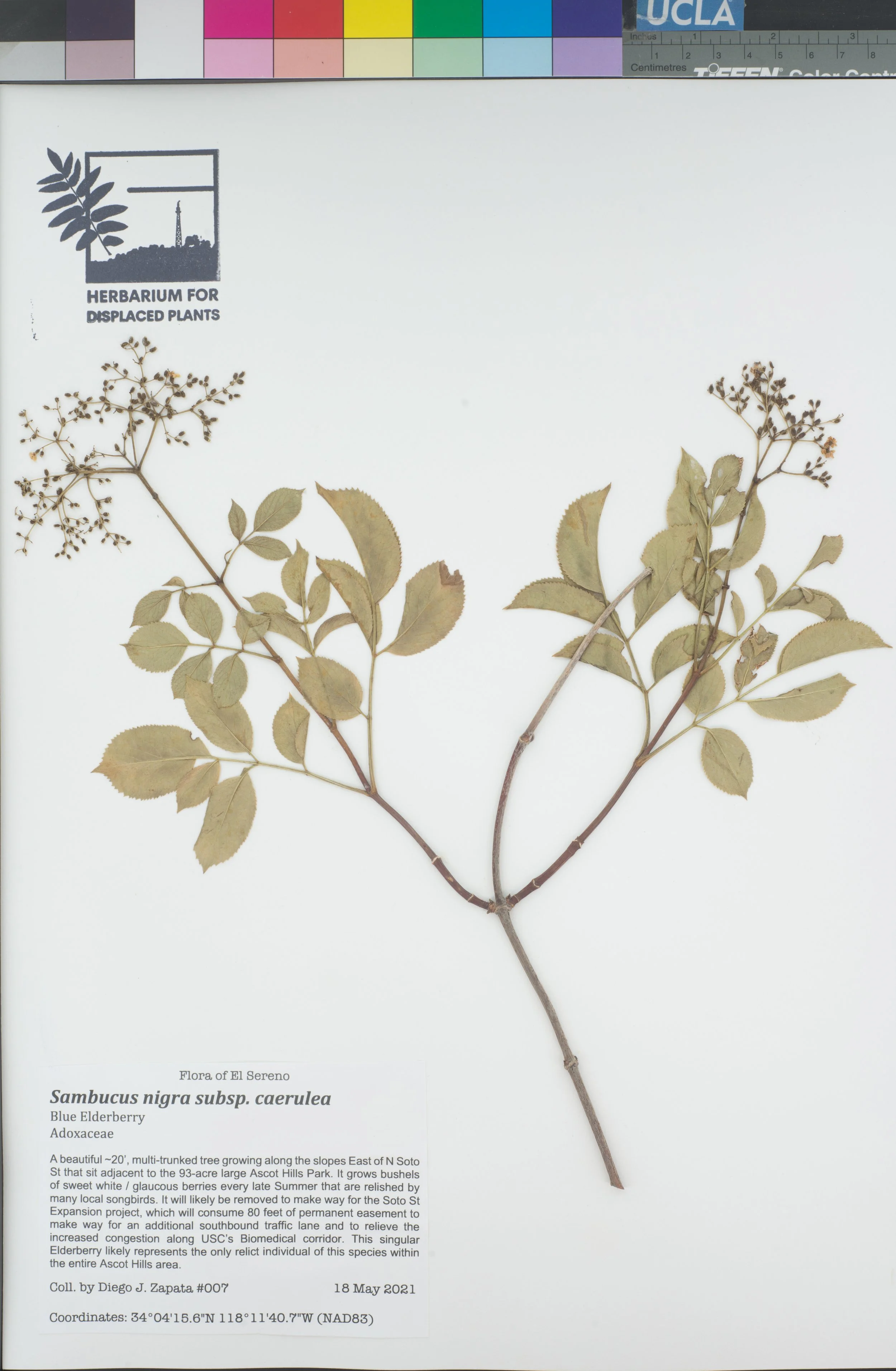
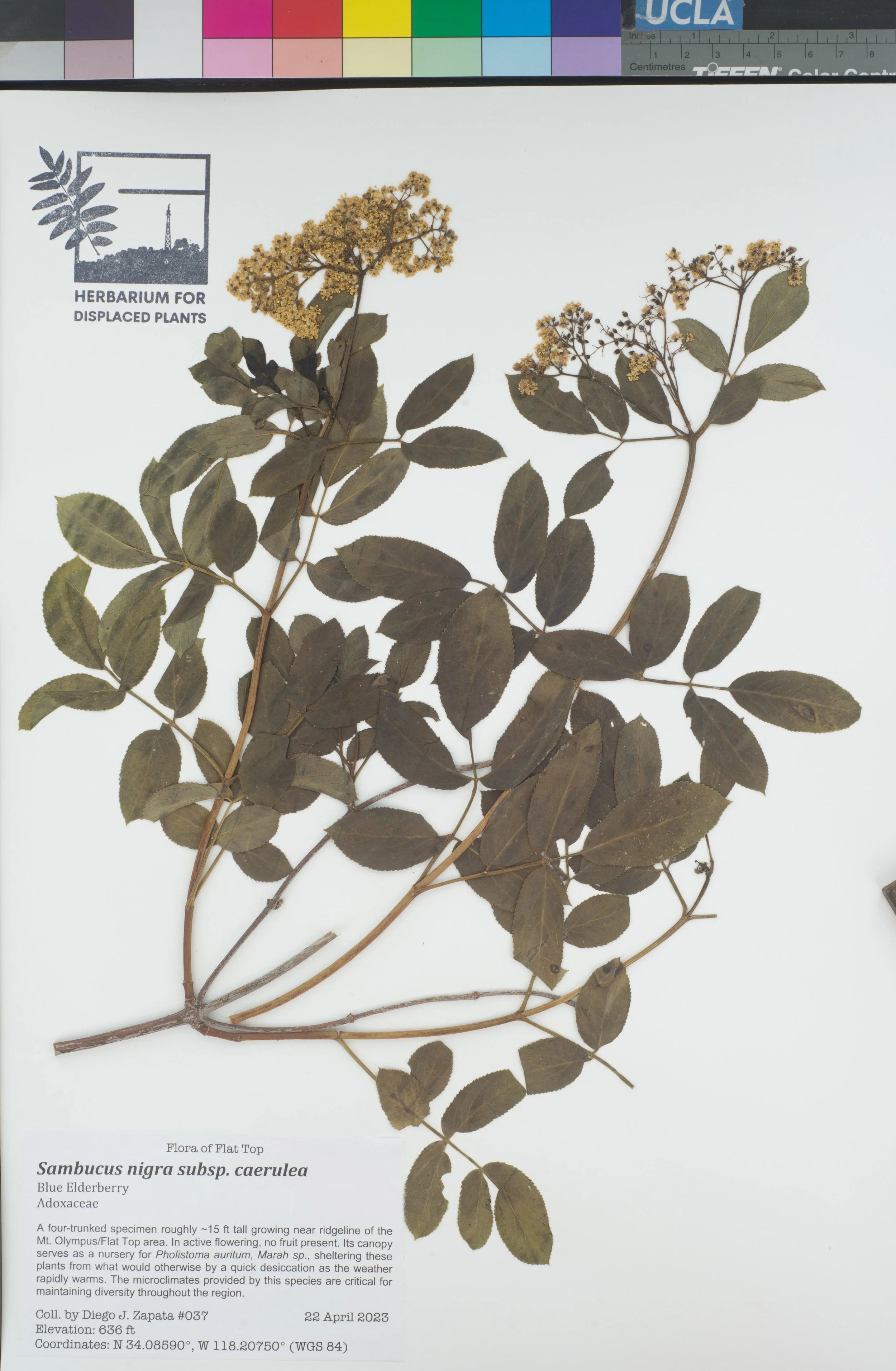
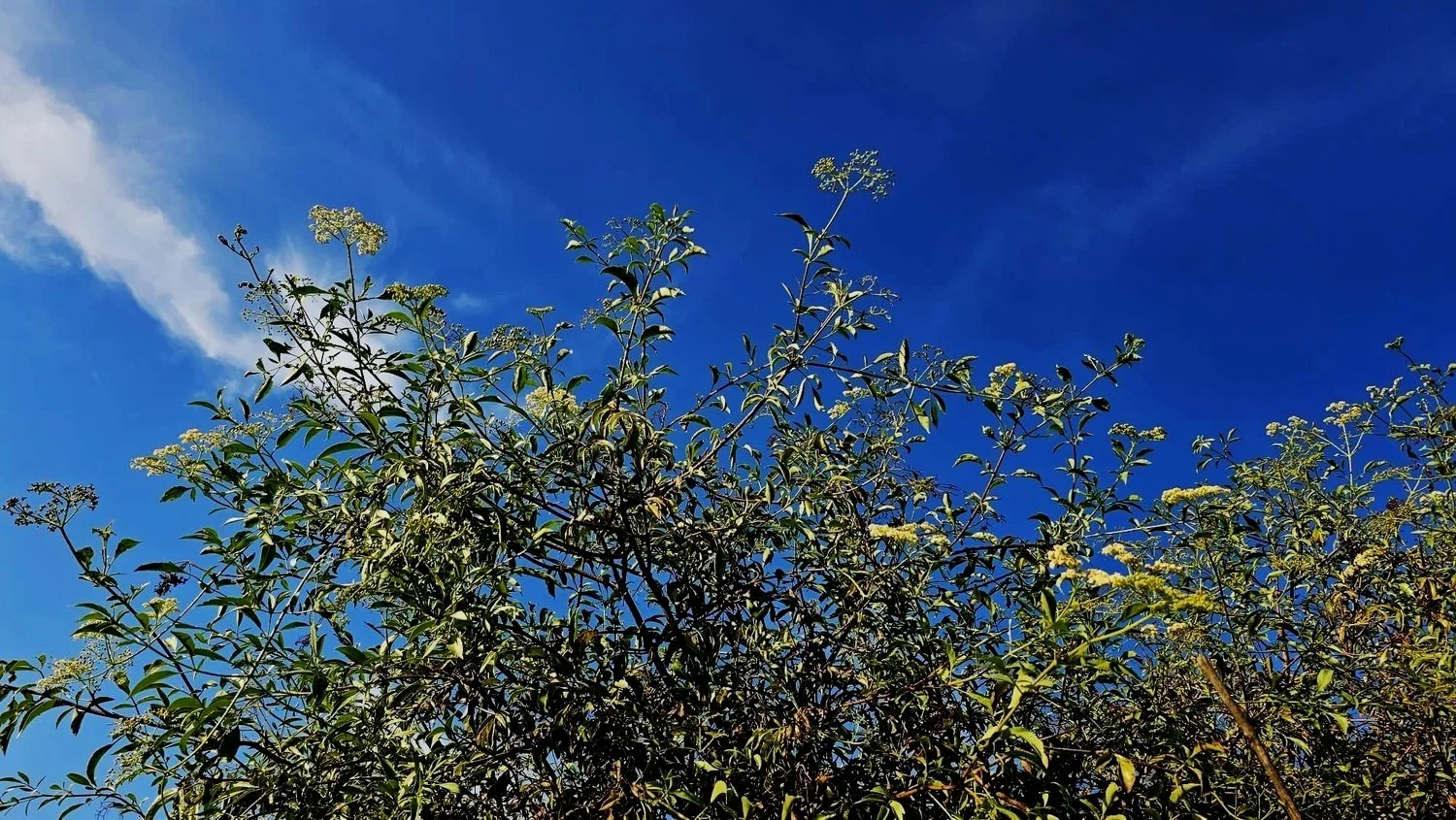
Habit. 10-30 ft tall shrub or tree. Tends to accumulate dead branches as the canopy grows through time. While unsightly to some, this form provides vital shelter to many bird and arborescent mammal species.
Leaves. Compound leaves with 3-9 leaflets. Leaf margins serrated. Leaflets are elliptical to lanceolate in shape. Axis often bowed and base of leaves usually asymmetric.
Flowers. Cream-colored inflorescence, flat-topped, central axis generally not dominant, with spreading petals (Figure 1A). Flowers appear March - September.
Fruit. Umbel-shaped clusters of flowers ripen into white, green, purple to black fruit, always highly glaucous (Figure 1B & 1C). 4-6 mm in diameter. Edible. Seeds have a cyanide-inducing glycoside, which purportedly cause nausea in some people when raw fruit are consumed in large quantities.
Phenology. Drought-deciduous; individuals growing along foothills typically go dormant in the summertime whereas individuals growing along riparian corridors can remain verdant, blooming, and fruiting throughout much of the year.
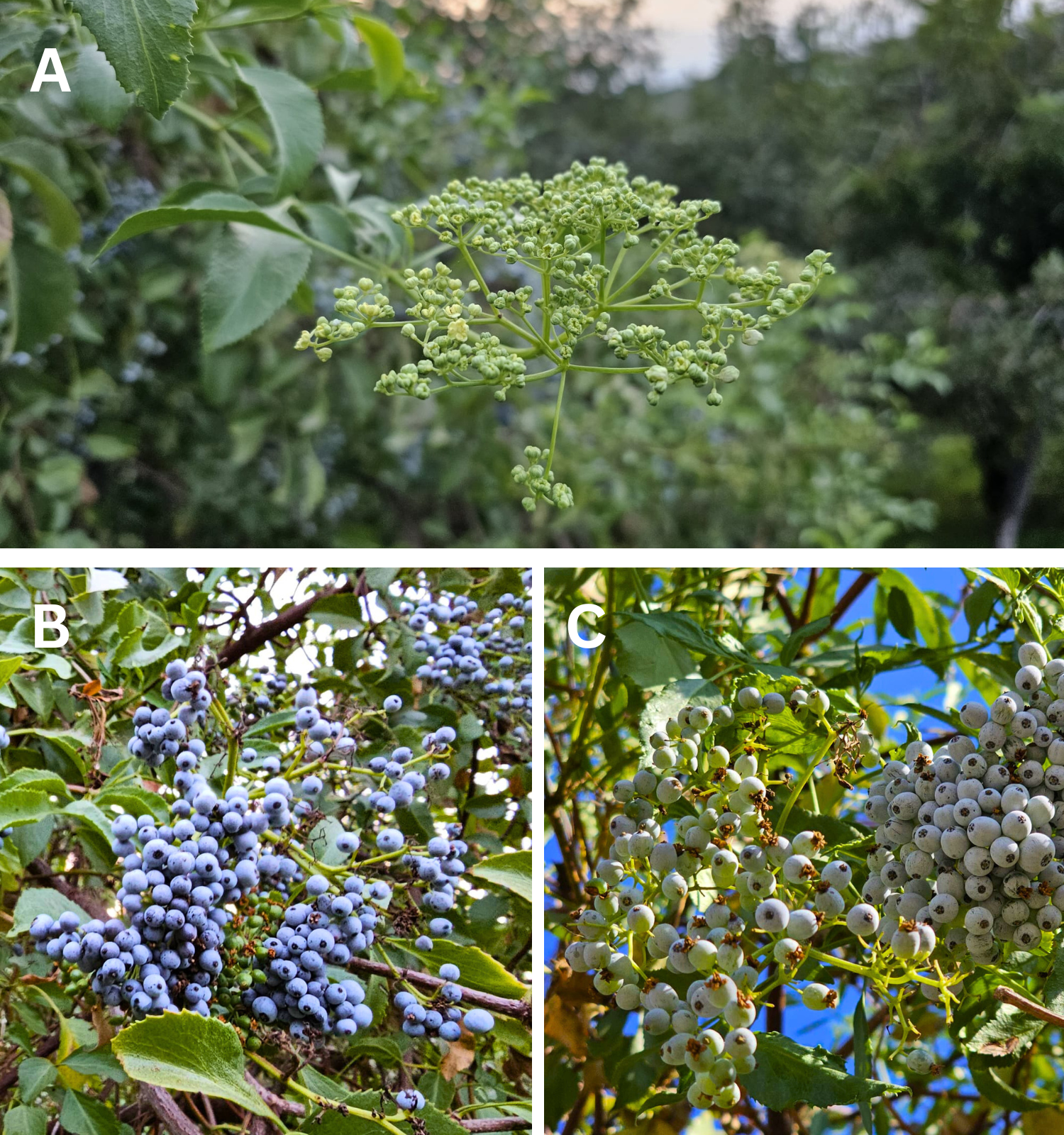
Figure 1. (A) Blue elderberries have umbel-shaped flower clusters that ripen into bunches of edible fruit (. The berries are always covered with a film of natural yeasts that give them a glaucous look when ripe. (B) Berries can ripen into a deep blue, purple, or black (after wiping off the film), (C) but can also ripen white/green.
Ethnobotany
Elderberry produces edible berries when ripe, but for the Chumash, it was much more valuable as a source of wood for tools (bows, smoking pipes, flutes, clappersticks, and fire sticks) and medicine (Timbrook, 2007). Because elderberry shoots and branches are filled with a soft pith at their core, they can be readily processed by removing this pith to produce hollow tubes widely used to create these aforementioned tools. Elderberry flowers were dried in the sun for later use in treating colds, fevers, measles, sore throats, and constipation or to induce sweating when drunk as tea.
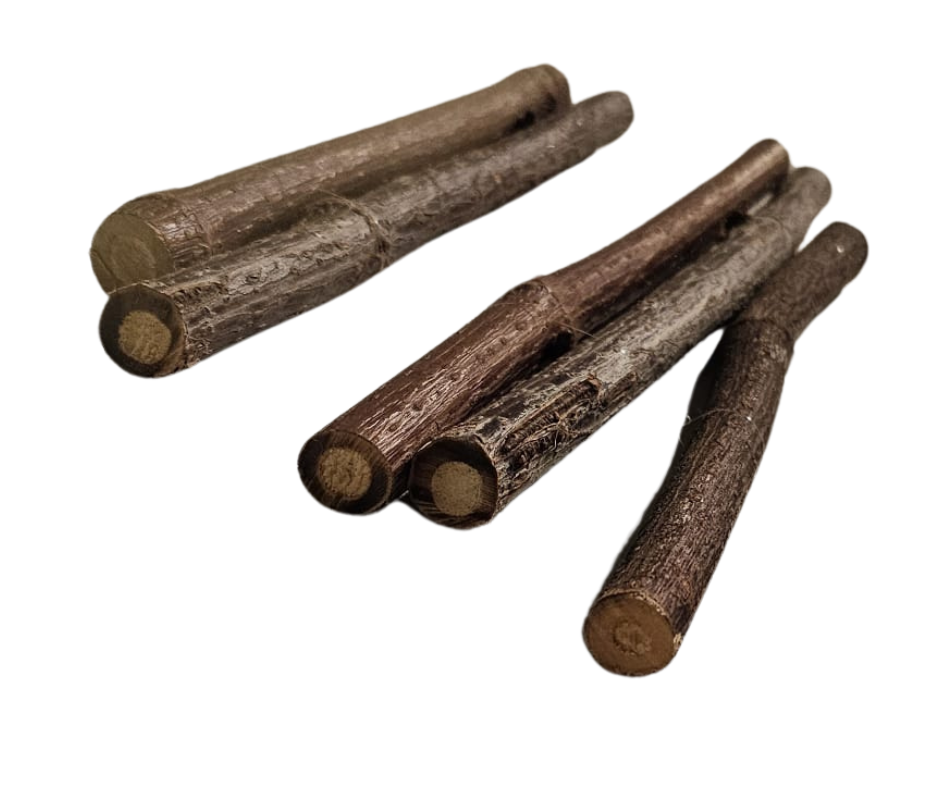
Figure 2. Cross section of elderberry sticks revealing their soft pithy core.