Laurel Sumac
Malosma laurina | Anacardiaceae
Among the most resilient and widespread shrub species of Los Angeles’s chaparral and woodland ecosystems, Laurel Sumac plays a crucial role in stabilizing even the most degraded habitat fragments of our city.
Description
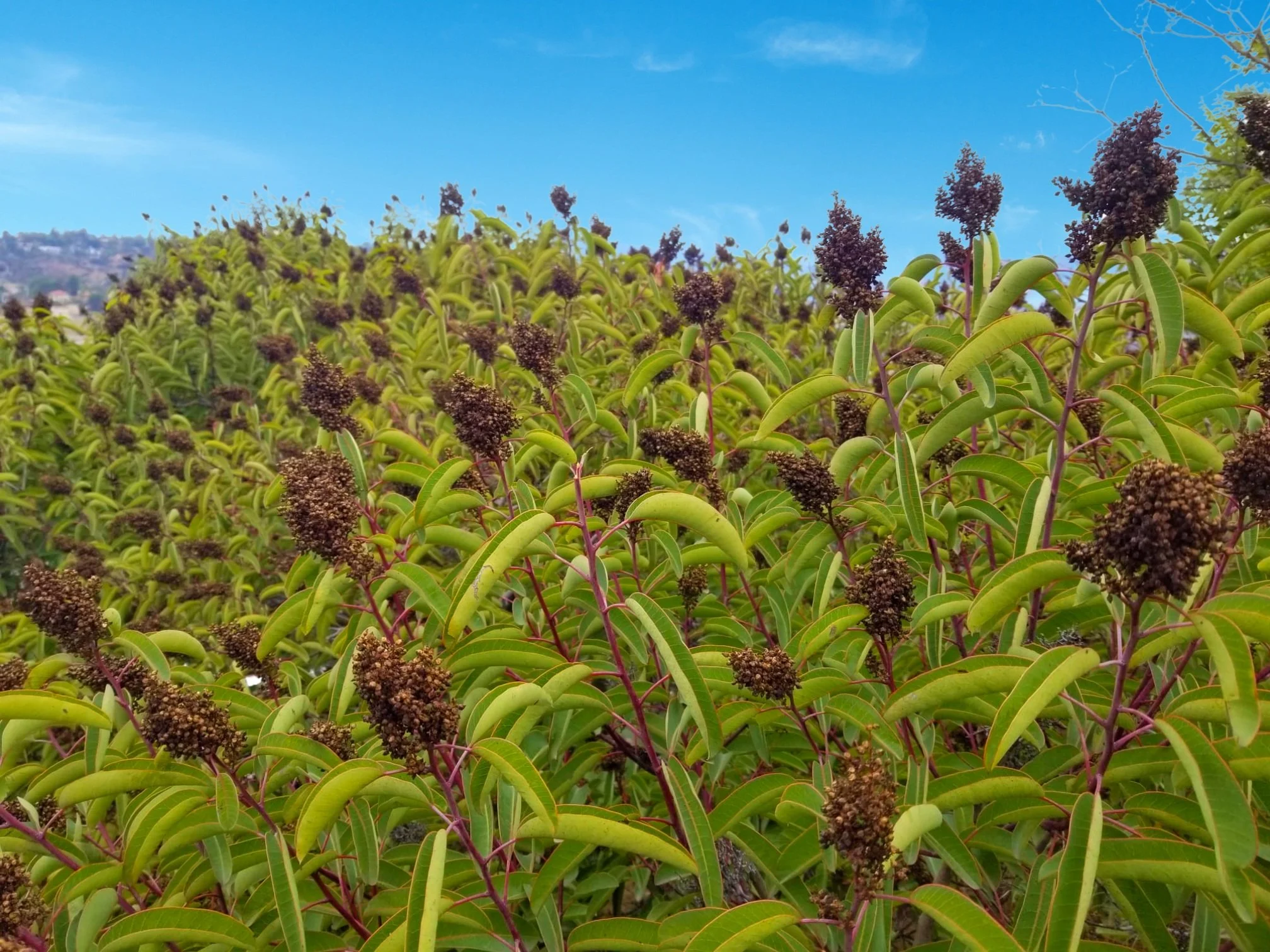
Habit. 6.5-20 ft tall shrub or small tree, with rounded form due to low-lying but spreading limbs; often as wide as it is tall. unarmed.
Leaves. Simple leaf; blade 3 - 10 cm long and 2 - 4.5 cm wide, often folded along midrib to resemble a taco (usually less expressed in shade leaves); petiole 10 - 40 mm; elliptic to lance-oblong, +- leathery. Very fragrant with a pungent green odor and notes of turpentine. Many would describe the scent of Laurel Sumac as the quintessential smell of Southern California’s chaparral. Classic example of a sclerophyllous leaf.
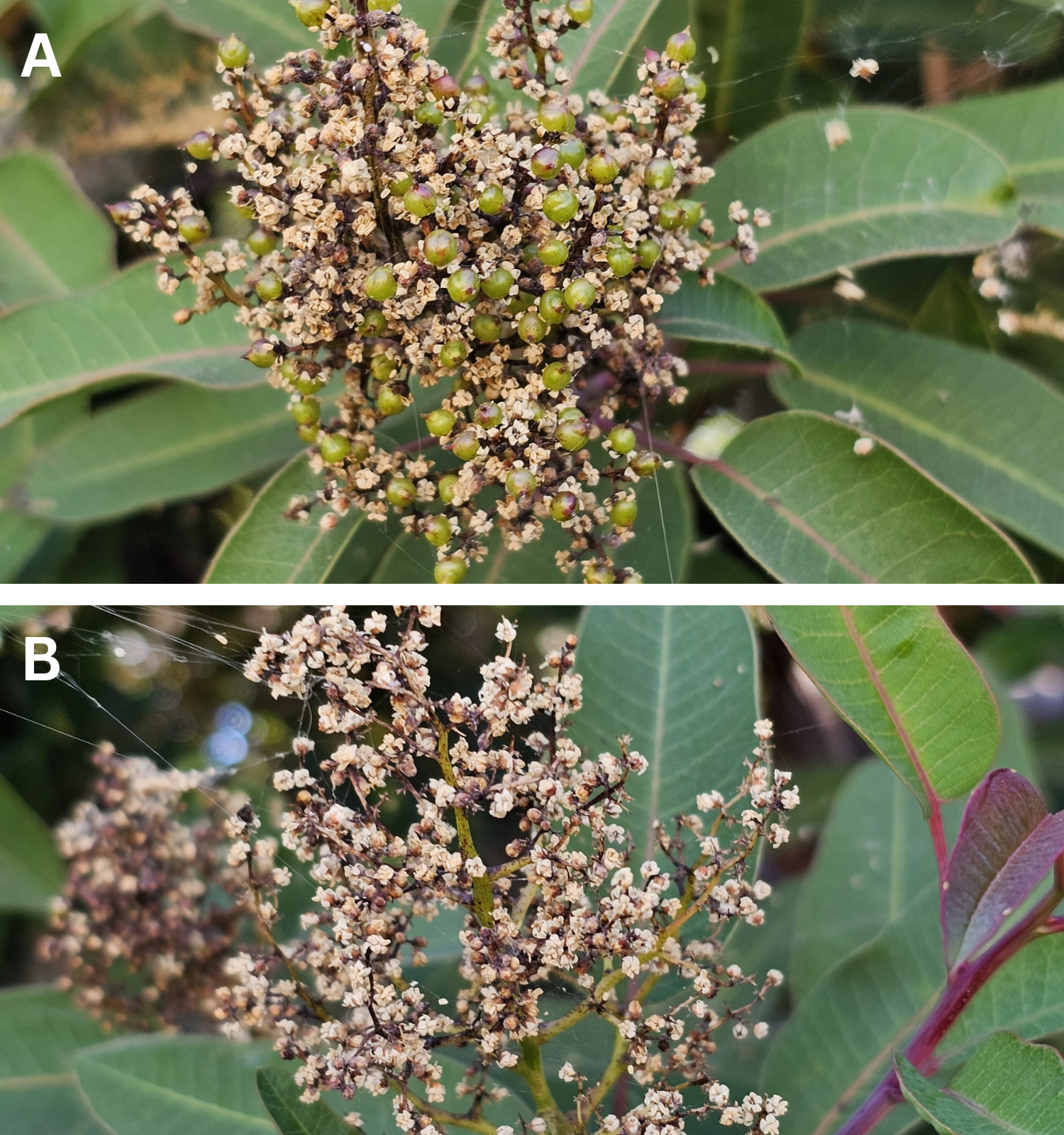
Flowers. Sepals green, entire; petals generally white. Flowers occur on terminal, multi-branched clusters or bractlets up to 8 inches in length. Flowers are anatomically bisexual but functionally unisexual. In other words, individuals bear flowers with only functional stamens (all male) OR functional pistils (female) with some separate spontaneous male flowers. Old male flowers dry to a yellow or dark brown and persist for months after flowering has ceased.
Fruit. A drupe. Small single-seeded fruit 2 - 3 mm in diameter; glabrous. Fruit is green when developing, red when ripe, aging to white to dark brown.
Phenology. Evergreen with new tender red shoots in early spring, flowering in the height of summer (June - July), and fruit maturation in late summer to early fall (August-September). Very fire-adapted: will re-sprout from burls after fires; seeds germinate after experiencing heat of a fire.